Perspectives

Product-led growth: Where AI companies differ from SaaS



A lot of venture work does not arrive elegantly. It arrives in WhatsApp groups, forwarded decks, half-remembered founder names, and that slightly guilty feeling when you realise the company you meant to add to the CRM three days ago is still sitting in your notes app. Somewhere between logging the company, looking up the founders, checking what else we know about the space, and drafting an email, a surprising chunk of the day disappears. It is not the intellectually difficult part of the job, but it is an uncomfortably large part of it.
That has felt increasingly strange to me because, at least in theory, our job as investors is to evaluate AI startups and stay close to the edge of what is actually being built. We spend a lot of time talking about how transformative this technology will be across sectors, and to be fair, we are already seeing that play out in all sorts of places. But there is something slightly absurd about spending the day discussing agentic workflows and model orchestration, only to then lose an hour to CRM admin, manual founder research, and chasing follow-ups. The future is allegedly here; it is just still buried under tabs.
So over the last few months, I started playing around with automation tools, partly out of curiosity and partly out of self-defence. The goal was not to build some autonomous investor fantasy, and certainly not to automate judgment. I do not think the hard part of venture is filling in fields or sending the first email. The hard part is having a view. But venture does have a long tail of repetitive workflows that quietly consume time and attention, and I wanted to see how much of that I could strip away so I could spend more of the day thinking rather than administrating.
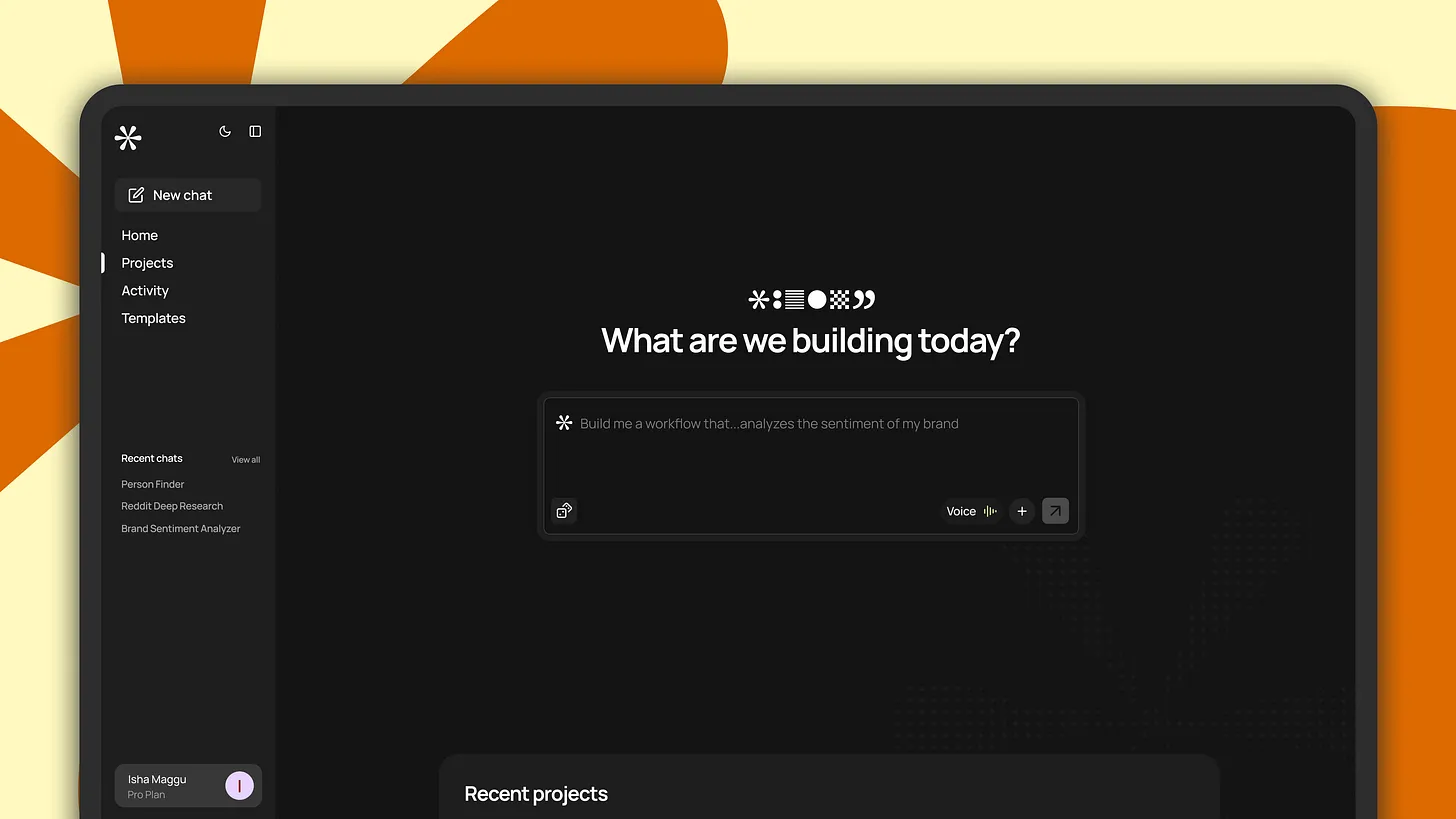
As we announce our investment into CodeWords, I thought the most useful thing I could do was explain what I have actually built with it, where it helps, and where the human still very much stays in the loop. If you are an investor buried under repetitive workflows, hopefully this is helpful.
Part of how we invest is getting genuinely deep into the product during due diligence. We do not just look at metrics and talk to customers; we actually use the thing. So when we were evaluating CodeWords, I tried it alongside a bunch of other automation and agent-building tools on the market. Some were clever but brittle. Some were powerful but wanted far more technical setup than I was prepared to give them. Some integrated with the obvious systems but could not reach the places where a lot of venture context actually lives. CodeWords was the best, and that conviction in the product is a huge part of why we invested.
What made it stand out was surprisingly practical. First, it did not require any technical expertise. I could describe the workflow I wanted in plain English and it would build it. No code, no config files, no spending a weekend learning some obscure API documentation. Just tell it what you need and it figures out the wiring.
Second, and this mattered a lot more than I initially expected, it was the only tool I tried that could access LinkedIn. In venture, a huge amount of relevant context sits there: founder histories, prior operators, networks, company activity, hiring signals, and all the other bits of texture that help you form an early view. Most of the tools I tried could not touch that layer, which meant they were missing a big part of the picture from the outset.
I ended up building four agents around the earliest part of our workflow.
Agent 1: Intake and CRM enrichment. A lot of interesting companies do not arrive in a neat, structured pipeline; they come in through WhatsApp, group chats, random forwards, or links I send myself with every intention of sorting out later. This agent takes those companies and loads them into our CRM (which we run in Notion), then enriches the entry with the founder’s LinkedIn, company URL, location, industry, and whatever other basic context is useful. This is not exactly the stuff of dramatic AI demos, but it removes a task that is both mundane and oddly time-consuming, which is usually a good sign that it should not be done manually.
Agent 2: Preliminary screening. I want to be clear about what this is not: it is not making the investment decision, and I have no interest in pretending otherwise. What it does is pull together the sorts of signals I would normally have to go hunting for across too many tabs: prior work experience, education, what space the company operates in, and what has been published online about either the founder or the business. It does the first pass of desk research. The point is not to automate judgement; the point is to compress the time it takes to get to judgement.
Agent 3: Drafting outreach. This one pulls context from the CRM, similar deals we already have in the system, and other call notes or expert references that might be relevant, then produces a first draft of an email. I do not find it 100 per cent perfect yet, and I would not send it blind, but it is usually a very solid base. That matters more than it sounds. Starting from 80 per cent is very different from starting from a blank page, particularly when you are moving quickly. The draft also gets written back into the CRM and sent to my inbox, which keeps the workflow tidy rather than creating yet another place where things can get lost.
Agent 4: Follow-up nudges. If a founder has not responded, and the deal status suggests the conversation has stalled, it drafts a follow-up. This is not some grand frontier-model use case. But it solves a very real problem, which is that follow-ups are easy to postpone, easy to forget, and easy to tell yourself you will get to tomorrow. Usually tomorrow becomes next week.
None of this replaces the actual work of investing. It does not create conviction, it does not build taste, and it does not tell you whether a founder is exceptional or whether a market is ripe. What it does is remove some of the workflow plumbing around the edges. And I have become increasingly convinced that this is where a lot of AI’s practical value sits right now. Not in the theatrical claim that it will do the whole job for you, but in the much more grounded reality that it can strip out the repetitive, context-switching admin that fractures your day and leaves less room for actual thought. The cost of admin is not just the minutes themselves; it is the fragmentation.
I tried other automation tools before landing here, and the biggest difference with CodeWords was that the integrations were simply much easier across the stack of tools I already use. That meant it could draw on better context, and because it had better context, the overall accuracy was much stronger. In practice, that is what makes the difference between a tool you genuinely fold into your day and one you use for a weekend experiment before quietly abandoning it.
I suspect I am only at the beginning of this. There are a few more workflows I want to build, and I am also in the process of setting up an OpenClaw on an old computer so I can properly sandbox some more experimental things without causing chaos on my main machine. More to come on that.
If our job is to invest at the edge of AI, the least we can do is let the edge touch our own inboxes, CRMs, and calendars first. Not in a dramatic “the agents are replacing us by Tuesday” sort of way. Just in the far more useful sense of buying back a little more time to think.
Give CodeWords a go! You can sign up here
Link to article on substack: https://isabella269258.substack.com/p/using-codewords-to-buy-back-thinking?r=1i3bj0&utm_campaign=post&utm_medium=web&triedRedirect=true






Visionaries
Visionaries
Visionaries
Judith Dada
Robert Lacher
Judith Dada
Isabella Yamamoto
Visionaries
Visionaries
Visionaries